Thanks for joining me!
Good company in a journey makes the way seem shorter. — Izaak Walton

Just a place for me to share my experiences with BBQ and other items of my interest
Thanks for joining me!
Good company in a journey makes the way seem shorter. — Izaak Walton
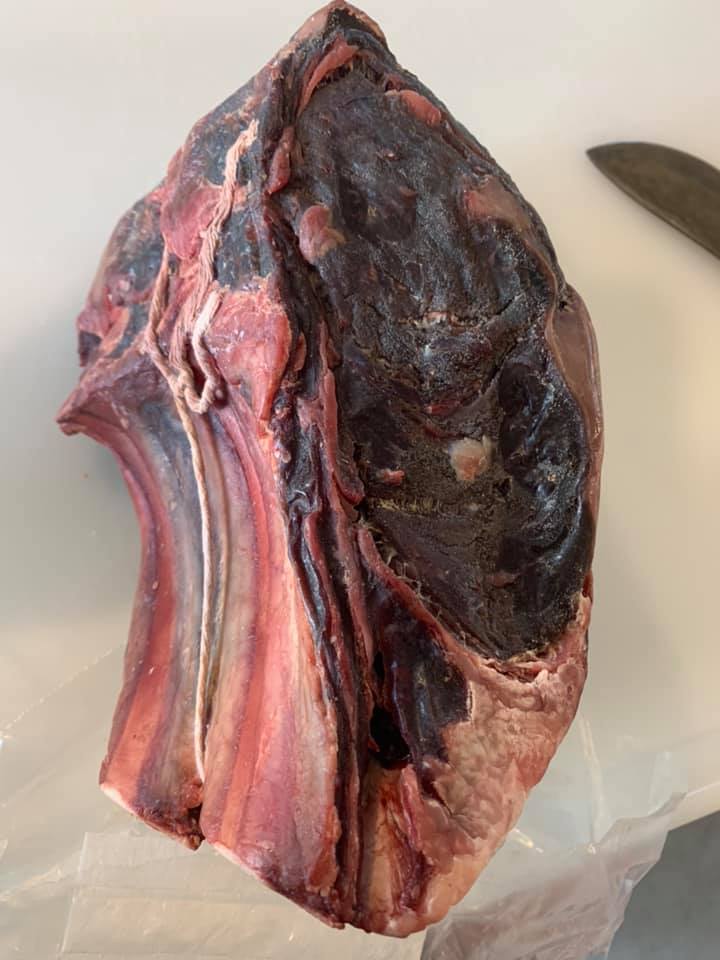
My Father and I have been thinking about dry aging steaks for some time. Recently I discovered Umai Dry bags and decided to give them a shot. Basically the Umai Dry bag is a membrane type of Vacuum Seal bag that allows you to dry age meats in your average refrigerator.
A study was done at KSU in 2005 that shows Umai bags are the same as dry aging in a cabinet. The dry aged to pieces of meat from the same cow, one in a Umai bag and one in a dry age cabinet. The finished project was then tested and compared in a blind taste panel. It was determined to be the same process
Umai bags have a lower up front cost for someone wanting to experiment with dry aging, but in the long term if you enjoy the hobby you are better off having a cabinet vs buying bags all the time.
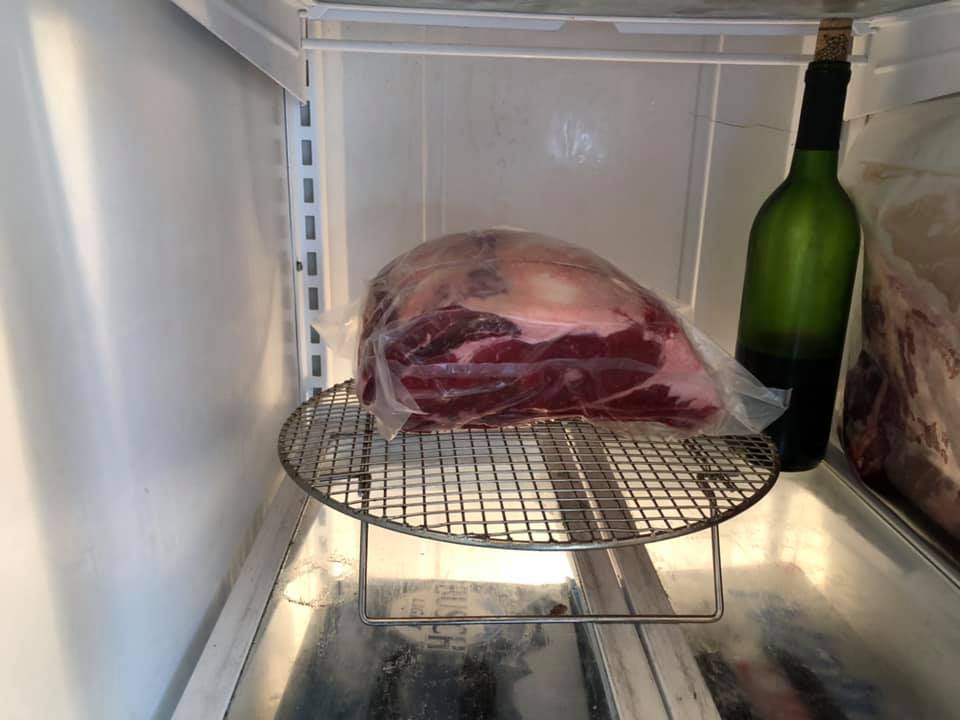
We secured a small 5 pound rib eye roast from our local grocer and sealed it up according to the manufacturers recommendations. We initially decided to go for 60 days, but when we looked at the calendar we noticed that Father’s day was right there close to 60 days. So a decision was made to eat on Father’s day as we usually bbq that day anyways. Then my dad scheduled a motor cycle trip that weekend and we pulled the meat a few days early and it ended up aging for 47 days.
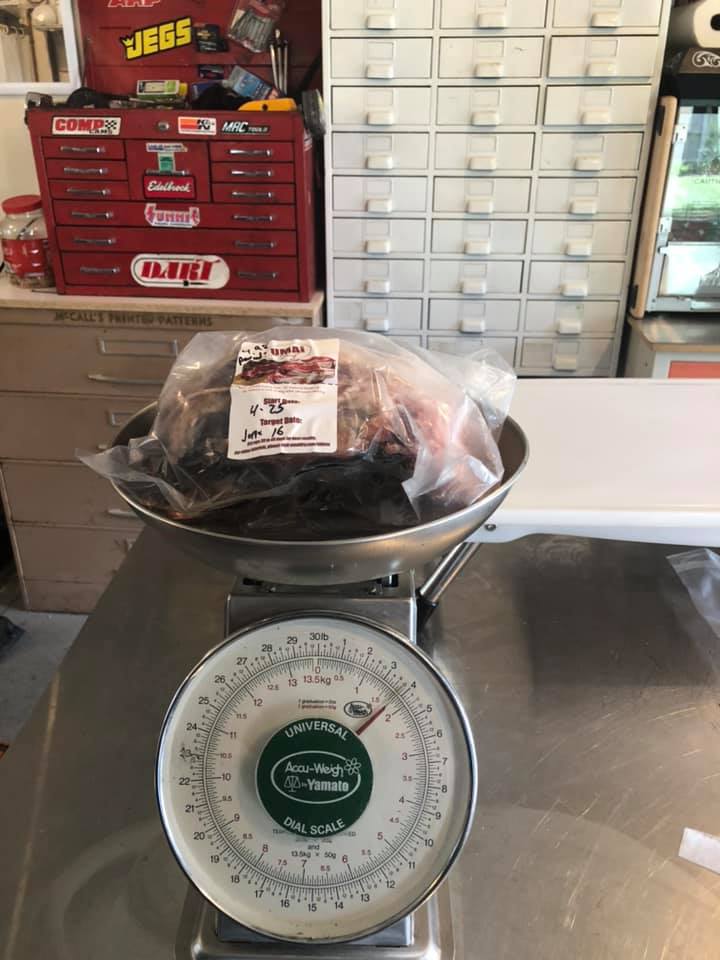
47 days in we pulled the roast from the fridge to eat. We weighed the roast and found it had lost about 1.25lbs of weight.
We removed it from the bag removed the pellicle and the bones, weighed what remained and we had 1.5 pounds of meat. So we lost quite of bit of what we had originally paid for. Ribeye roasts generally run $12/pound here, we ended up with 1.5 pounds of edible meat and that is roughly $45 a pound. Add in the cost of the Umai bag and we are at $50 a pound.
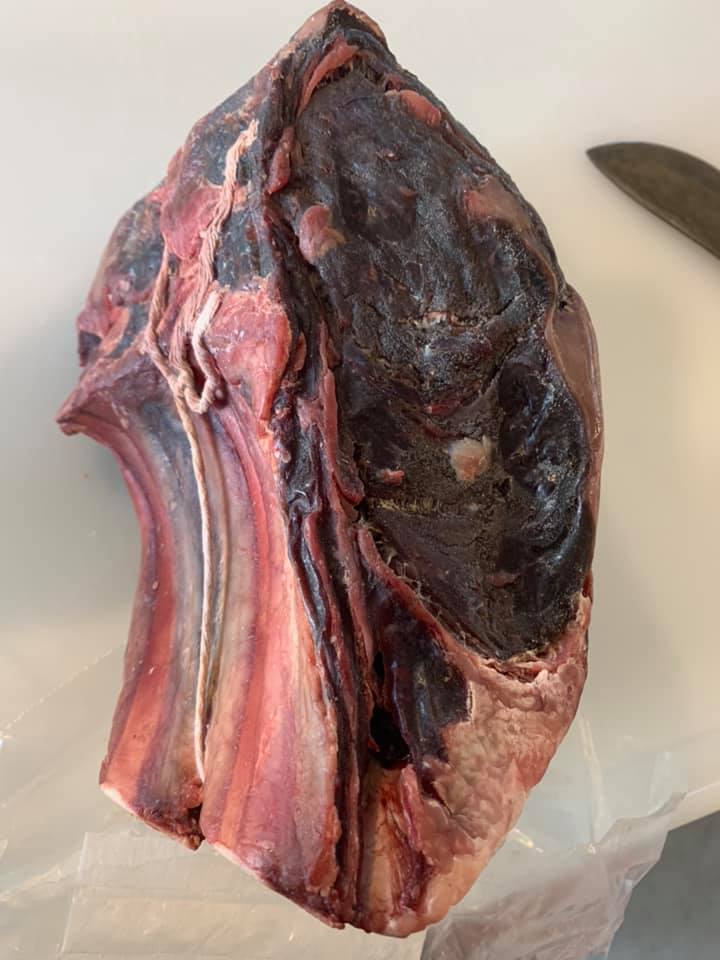
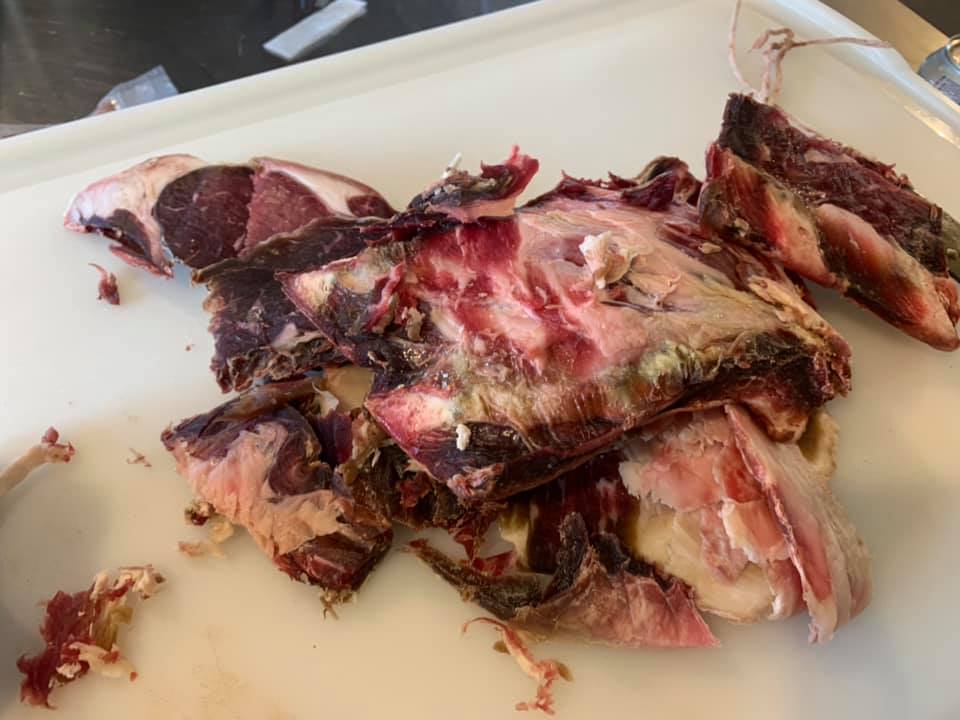
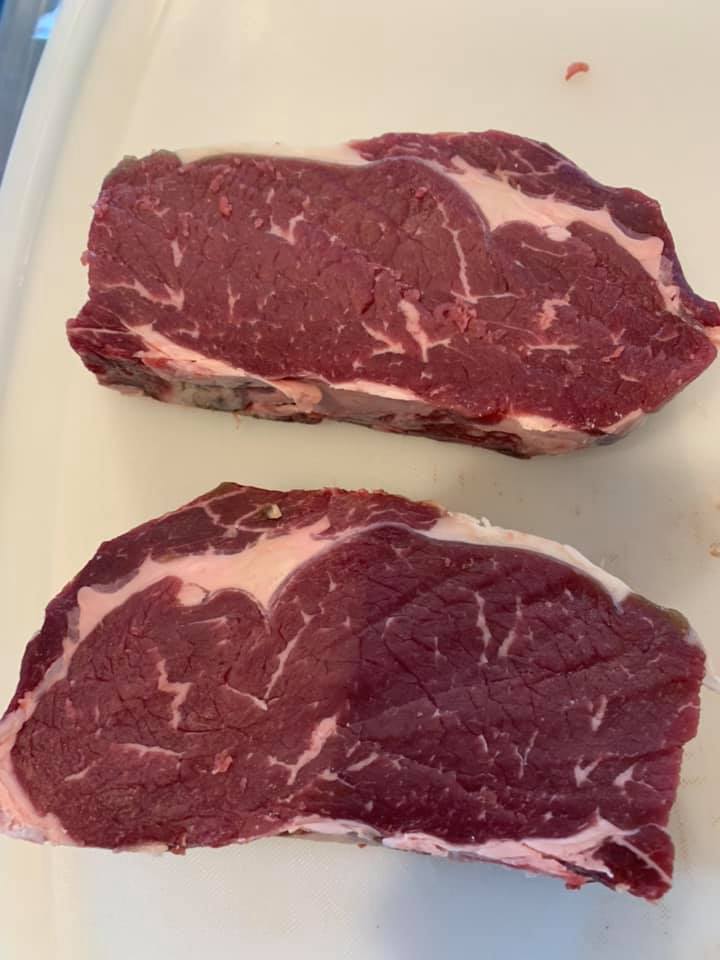
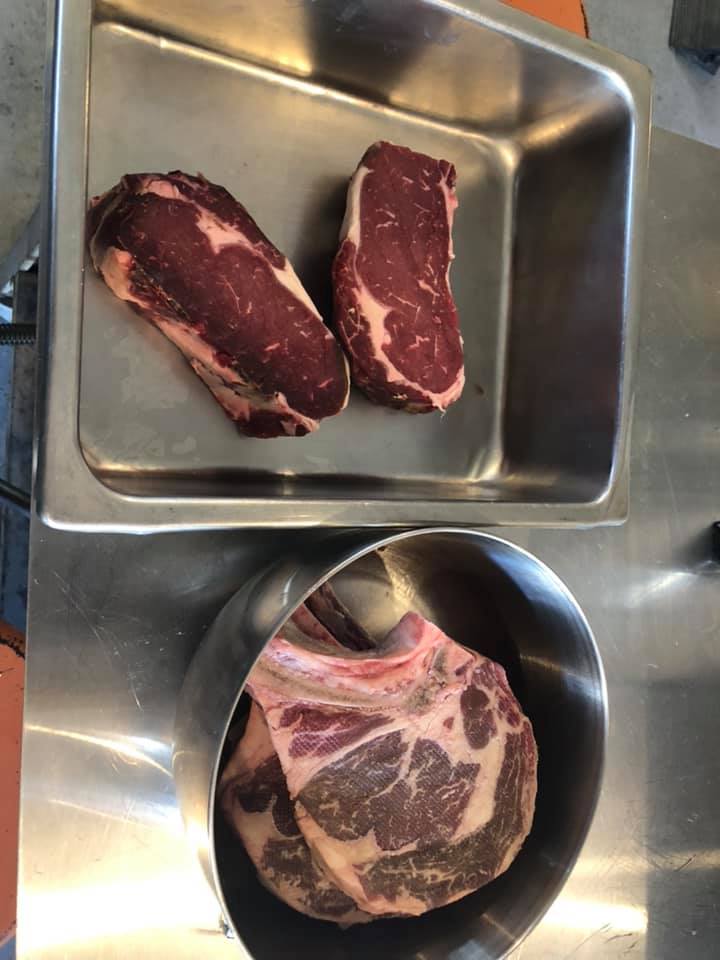
Time to eat: We decided to grill a few “fresh” rib eyes to compare the two. Fired up the old weber with some weber charcoal and let her rip. Seasoned the steaks with salt and pepper only then grilled for 1.5 minutes per side. Then moved all the steaks to the side until they reached 130-135 degrees. Then we let the steaks rest while we drank another beer
After the beer we sliced the steaks up so we could compare side by side, dry aged w/ “fresh”
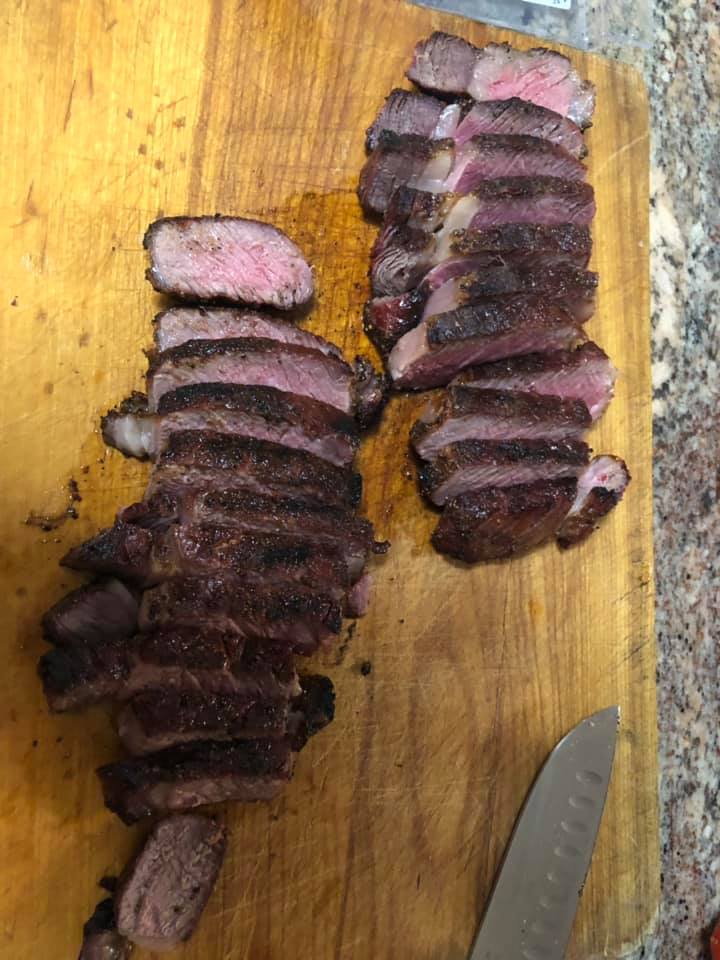
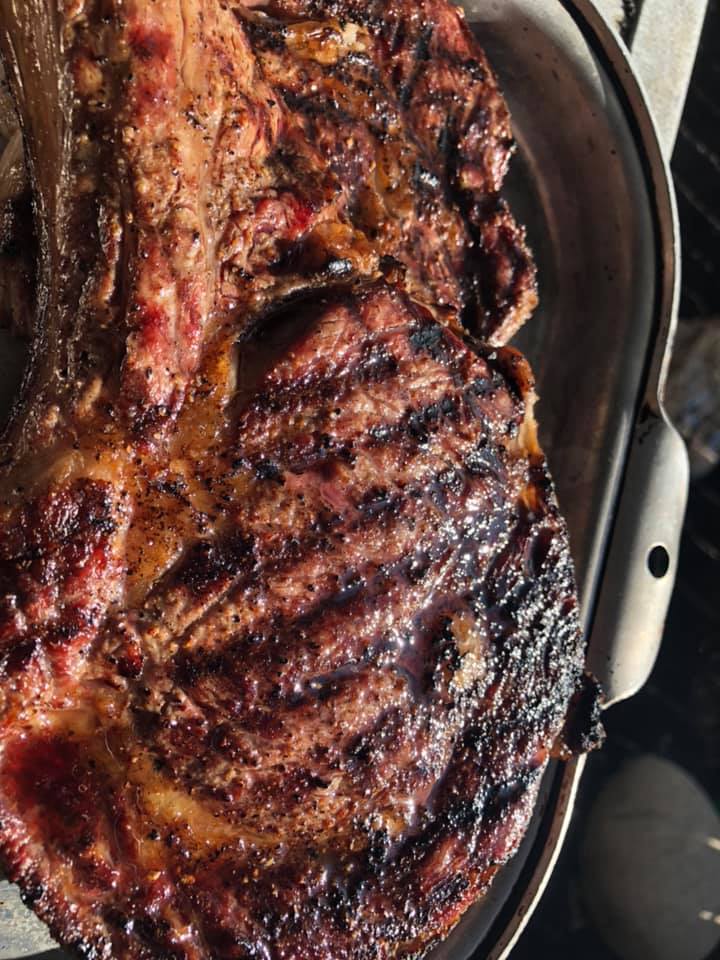
Conclusion: I was a little disappointed with the results. The is the first and NOT the last time I will try this. Everything I read online said to expect a beefy or nutty flavor. To me, I could not taste a difference between the two steaks. However, the dry aged steak was more tender, but a different kind of tender.
The best way I can think to describe the “different kind of tender” is as follows: You know when you get a good tender rib eye cap, the strands of meat practically separate when you cut it with a fork. On the dry aged the individual strands did not separate, the strands appeared to stay together and the meat itself was more tender. It was more like a filet type of texture. And it was more tender than the “fresh” rib eye sample.
So was the increased cost of the finished product (factoring in how much meat was discarded) worth the results? I don’t know. If I was buying a steak at the local grocer at $50 a pound I would have expected more and probably would’t buy it twice. But I do see myself trying the dry age process again. Next time a full 60 days and probably start with a bigger piece of meat.
 Big John's BBQ Blog